Lamb Biryani vs. Goat Biryani: Understanding the Difference Before You Order
Lamb biryani vs. goat biryani — learn the real differences in flavour, texture, and cooking before you order your next plate of Hyderabadi dum biryani.
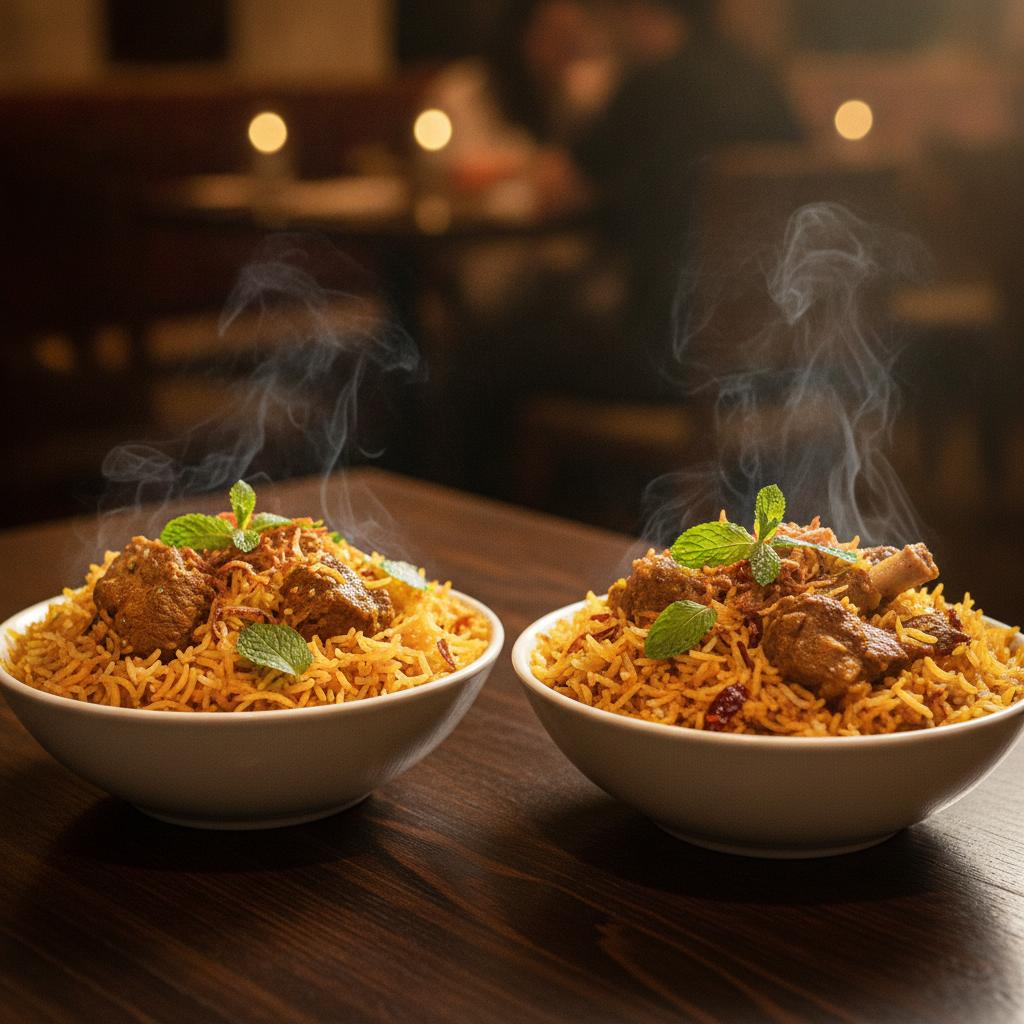
Two Biryanis. One Big Question.
If you have ever stared at a biryani menu and paused at the words "lamb biryani" and "goat biryani," you are not alone. The confusion is real, the stakes feel surprisingly high, and the answer — once you understand it — changes how you order forever. At Biryani Master, we get this question more than almost any other, and we think it deserves a proper, honest answer rather than a quick shrug.
Both varieties are bone-in, slow-cooked, and deeply aromatic. Both carry the kind of richness that turns a meal into a memory. But they are not the same, and knowing the difference will help you order with confidence every single time.
Quick Answer
Lamb biryani uses meat from sheep (typically younger animals), giving it a milder, slightly sweet flavour and tender texture. Goat biryani — also widely known as mutton biryani across South Asian cuisine — uses goat meat, which is leaner, firmer, and carries a deeper, earthier flavour that stands up beautifully to bold spices. In Hyderabadi tradition, "mutton biryani" almost always refers to goat, slow-cooked on the bone with whole spices and long-grain basmati rice.
What Is the Actual Difference Between Lamb and Goat?
Lamb and goat are two entirely different animals, and the distinction matters on the plate. Lamb comes from sheep, usually animals under one year old. The meat is pale pink, marbled with a moderate amount of fat, and carries a mild, slightly grassy sweetness. Goat is leaner overall, with less marbling, a deeper reddish colour, and a more pronounced, savoury flavour that many people describe as earthy or gamey in the best possible sense.
Here is where the South Asian naming tradition adds a layer of complexity: across India, Pakistan, and Bangladesh, the word "mutton" has historically been used to describe goat meat, not sheep. This is different from the British English usage, where mutton refers specifically to older sheep. So when you see "mutton biryani" on an Indian restaurant menu — including ours — you are almost certainly looking at goat, slow-cooked until it falls apart around the bone.
Understanding this one naming convention immediately clears up most of the confusion people carry into the ordering process.
How Do the Flavour Profiles Compare in a Biryani Context?
In a biryani, the meat does not sit beside the rice — it cooks with it, inside a sealed pot, breathing the same steam. That cooking relationship makes the flavour of the meat central to the entire dish, not just a topping.
Lamb in Biryani
Lamb biryani tends to produce a slightly sweeter, softer rice layer. Because lamb fat renders more readily, it soaks into the basmati during the dum (slow-steam) process, creating a rice that feels lush and almost buttery. The meat itself becomes very tender quickly, which makes it a gentler introduction to bone-in biryani for people who are newer to the format. The overall flavour profile of a lamb biryani is rounded, warm, and approachable.
Goat (Mutton) in Biryani
Goat biryani, on the other hand, rewards patience. Because goat meat is leaner and denser, it takes longer to cook through — and that extended cooking time is exactly what the dum method was built for. As the goat slowly releases its juices under pressure and steam, those juices carry deep, complex flavours into every grain of rice. A well-made goat biryani has layers: you taste the meat, the whole spices, the caramelised onion, and the saffron all at once, and none of them shouts over the others.
This is why Hyderabadi dum biryani has historically favoured goat. The cooking method and the meat were made for each other.
"A great goat biryani does not just feed you — it tells you the story of every ingredient inside the pot."
| Attribute | Lamb Biryani | Goat Biryani (Mutton Biryani) |
|---|---|---|
| Meat Source | Sheep (young) | Goat |
| Flavour | Mild, slightly sweet, rounded | Deep, earthy, boldly savoury |
| Fat Content | Moderate, well-marbled | Leaner, less marbling |
| Texture After Slow Cooking | Very tender, falls off bone easily | Firm then yielding, with chew |
| Spice Compatibility | Lets spices lead | Meat and spices share the stage |
| Common Name in Indian Menus | Lamb Biryani | Mutton Biryani or Goat Biryani |
| Best For | Newcomers to bone-in biryani | Biryani enthusiasts craving depth |
Why Does "Mutton Biryani" Almost Always Mean Goat in a South Asian Restaurant?
The short answer: it is a long-standing regional naming tradition, and it runs deep. Across the Indian subcontinent, goat has been the dominant red meat in home kitchens and restaurant kitchens for generations. When the word "mutton" entered Indian culinary vocabulary, it attached itself to goat, not sheep — and that association stuck across centuries of cooking culture.
The Hyderabadi kitchen, in particular, built its biryani tradition around goat. The Nizams of Hyderabad were famously particular about their food, and the slow dum-cooked goat biryani that came out of those royal kitchens became the gold standard that chefs have been trying to recreate ever since. When you search for "mutton biryani near me" today, you are essentially searching for a dish with a several-hundred-year lineage rooted in goat, whole spices, aged basmati, and the patience of sealed-pot cooking.
At Biryani Master in Mississauga, our Hyderabadi Dum Mutton Biryani follows that same tradition. The meat is marinated, layered with partially cooked basmati, sealed, and slow-cooked so that every grain of rice carries the aroma of the goat and the spices together. There are no shortcuts in that process, and there should not be.
Which One Should You Order If You Are Trying Bone-In Biryani for the First Time?
This depends entirely on what kind of eater you are, and there is no wrong choice here.
If you are newer to bone-in biryani and want something that feels immediately welcoming, a lamb biryani is a gentle starting point. The meat is soft, the flavour is approachable, and you spend less time working the bone. For many people who grew up eating boneless chicken dishes, lamb biryani bridges the gap beautifully.
If you are a biryani enthusiast who wants the full experience — the kind of biryani that makes you close your eyes for a second after the first bite — goat biryani is the answer. The depth of flavour, the way the meat holds its character even after long cooking, and the way it transforms the rice around it: this is what people mean when they say biryani is an emotion. It is not just food. It is a feeling, and good mutton biryani near me is exactly what that search is really asking for.
Our honest advice? Try both on separate visits. Then decide which one you want as your regular. Most people end up with two favourites for different moods — and we are completely fine with that.
What Makes Hyderabadi Dum Biryani Different From Other Styles?
Hyderabadi dum biryani is distinct because of its cooking method, not just its ingredients. Most biryanis layer cooked meat with cooked rice. The Hyderabadi approach is different: the meat (marinated, raw or partially cooked) is layered with parboiled rice, then the pot is sealed with dough or a heavy lid, and the entire dish finishes cooking together over a slow, controlled heat — a technique called "dum pukht," meaning cooking in its own steam.
This matters enormously. The sealed environment forces the steam from the marinating meat to circulate through every layer of rice. The spices infuse from the inside out. The saffron water, the caramelised onions, the mint — every element has nowhere to go but into the rice. The result is a biryani where the rice itself tastes like an event, not just a vehicle for the meat.
This is the standard we hold ourselves to at both our kitchen locations in Mississauga. It is also why people searching for the best mutton biryani near me are often specifically looking for this Hyderabadi method, even if they do not always know to name it that way. They just know the difference when they taste it.
Whether you are dining in with family, picking up a party tray for an event, or placing a delivery order from across the GTA, the recipe and the technique at Biryani Master stay exactly the same. Consistency is something we take seriously, because one great visit should not be a lucky one.
Is Goat Biryani Healthier Than Lamb Biryani?
From a nutritional standpoint, goat meat is notably leaner than lamb. It contains less saturated fat than lamb while still providing a strong protein profile and important minerals including iron and potassium. For diners who want a rich, satisfying biryani experience with a slightly lighter red meat, goat is a reasonable choice on that basis alone.
That said, a biryani is a complete dish — the rice, the ghee, the spices, and the slow cooking all contribute to the final nutritional picture. Both lamb and goat biryanis are hearty, filling meals designed to be shared or savoured slowly. Neither is a light snack, and neither should be treated as one. Eat it for what it is: a proper, soulful meal built on tradition.
If you are curious about the general nutritional characteristics of goat versus lamb, resources like the Healthline food database offer straightforward comparisons — though nothing in a chart will prepare you for what either tastes like inside a well-made dum pot.
Ready to Taste the Difference?
Reading about lamb biryani and goat biryani is one thing. Tasting them is another. At Biryani Master in Mississauga, our Hyderabadi Dum Mutton Biryani is made the traditional way — sealed pot, slow heat, no shortcuts. Dine in with us, order for delivery, or set up a catering order for your next event. The biryani is ready when you are.
Order from Biryani MasterAbout the Author
The Biryani Master Team — Our team has spent years perfecting the art of authentic Hyderabadi dum biryani across our Mississauga kitchens, and we write about biryani the same way we cook it: with care, precision, and no shortcuts. If it is on this page, we have lived it in the kitchen.
Frequently Asked Questions
What is the difference between goat biryani and lamb biryani?
Goat biryani uses goat meat, which is leaner and has a deeper, earthier flavour that intensifies beautifully during slow cooking. Lamb biryani uses sheep meat, which is milder, slightly sweeter, and more marbled with fat. Both are bone-in and cooked using the dum method in the Hyderabadi tradition, but the flavour experience they deliver is noticeably different.
How do I find good mutton biryani near me in the GTA?
Look for restaurants that specifically mention the dum cooking method and Hyderabadi preparation — these are signals that the kitchen takes the process seriously. The presence of bone-in meat, long-grain aged basmati, and whole spices are also good indicators. If you are in or near Mississauga, Biryani Master offers dine-in, takeaway, and delivery so that finding good mutton biryani near me does not have to mean a long drive or a compromise on quality.
Why is it called mutton biryani when it is made with goat?
In South Asian culinary tradition, the word "mutton" has long been used to refer to goat meat rather than sheep. This is distinct from British English usage, where mutton means older sheep. Because Indian restaurant culture in North America is rooted in South Asian naming conventions, "mutton biryani" on most Indian menus means goat — slow-cooked, bone-in, and full of flavour.
Can I order mutton biryani for a large event or party?
Yes, absolutely. At Biryani Master, we offer biryani catering for events of all sizes, along with party trays that are ideal for gatherings, corporate functions, and family celebrations. Our Hyderabadi Dum Mutton Biryani is one of the most requested options for catering, and the recipe remains consistent whether you are ordering for ten people or a hundred. Reach out through our website to discuss your event requirements.
Written by the Biryani Master Team
Our team brings deep expertise — Authentic Hyderabadi dum biryani in Mississauga — slow-cooked, for dine-in, take-away, delivery and catering..