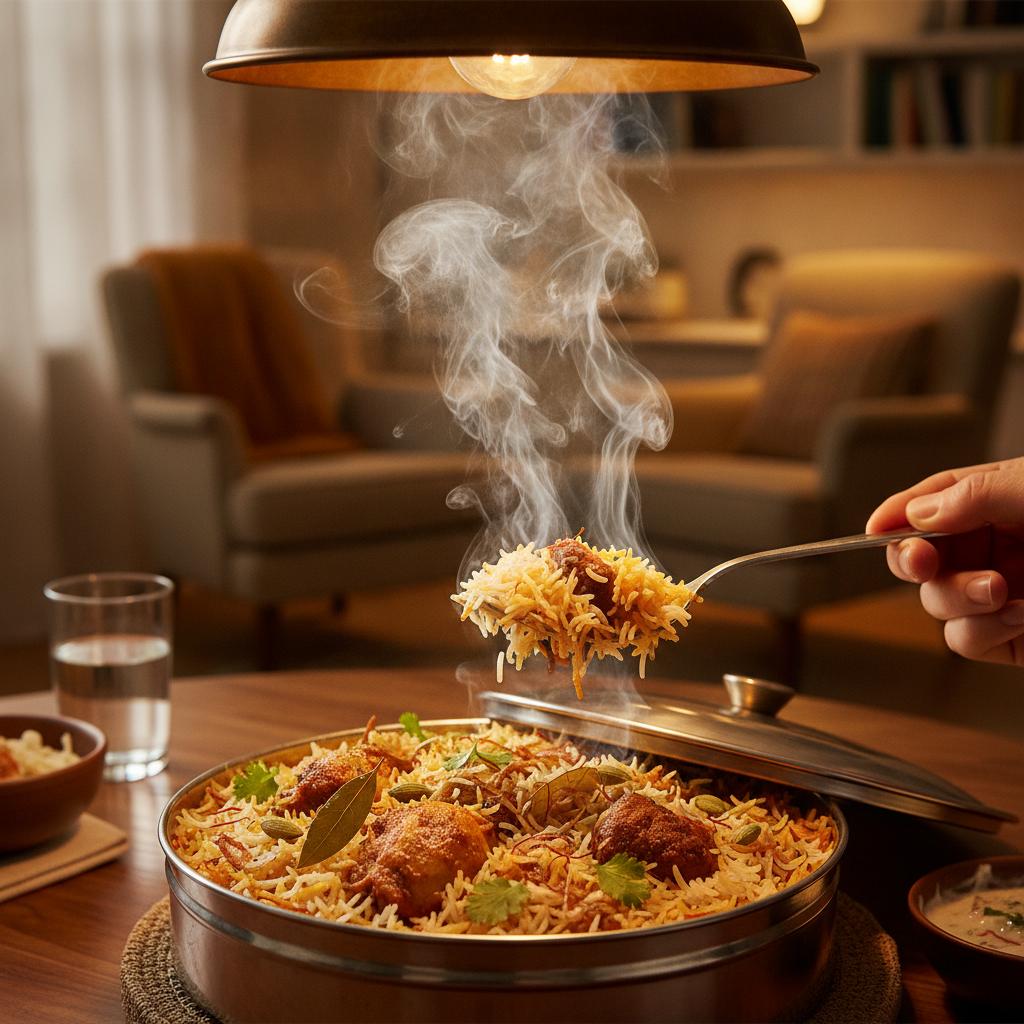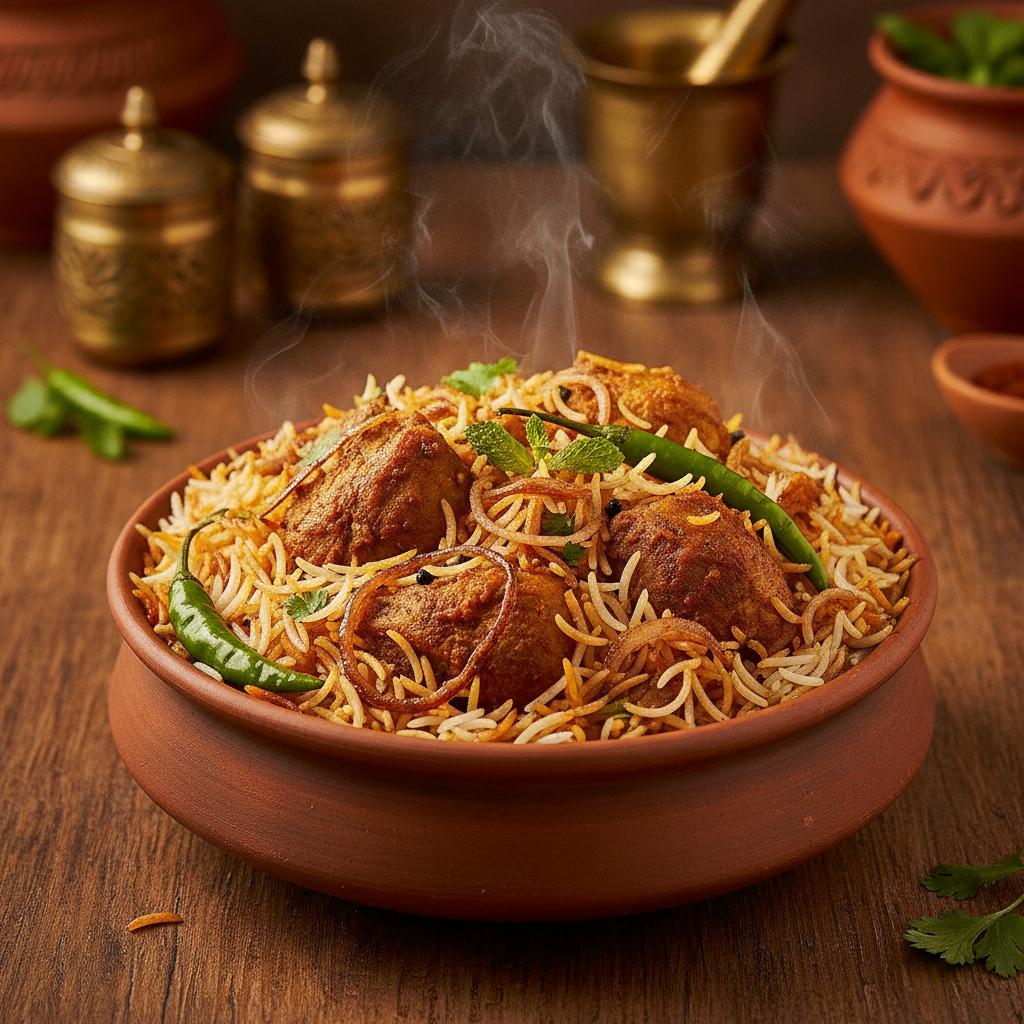
Kacchi Biryani Explained: The Most Traditional Biryani Cooking Method
Kacchi biryani explained: discover the ancient dum cooking method behind authentic Hyderabadi biryani and why it remains the purist's gold standard.
What Is Kacchi Biryani, and Why Does It Matter?
Kacchi biryani is not simply a recipe. It is a discipline — one that separates the casual cook from the devoted craftsman. If you have ever searched for the best hyderabadi biryani near me and wondered why one bowl tastes transcendently different from another, the answer almost always comes back to method. Specifically, it comes back to whether the kitchen followed the kacchi approach or took a shortcut. At Biryani Master, our foundation is built on this very tradition, and understanding it will change the way you taste every spoonful.
Quick Answer
Kacchi biryani is a traditional South Asian cooking technique in which raw, marinated meat and parboiled rice are layered together in a sealed pot and slow-cooked simultaneously over low heat — a process called dum. Because the meat never touches a separate pan first, all its juices, fat, and aromatics release directly into the rice, producing a depth of flavour that no pre-cooked method can replicate.
The word "kacchi" comes from the Urdu and Hindi root meaning raw or uncooked. In the context of biryani, it refers specifically to the state of the meat at the moment it is assembled with the rice. No prior browning, no par-cooking in a separate gravy — the raw, marinated pieces go straight into the pot, layered beneath and above the rice, and the whole assembly is sealed and left to cook together. This single design choice is responsible for a flavour profile that is richer, more integrated, and more aromatic than virtually any other preparation style.
How Does the Kacchi Method Actually Work?
The kacchi method works by harnessing steam, time, and a sealed environment to transform raw ingredients into a unified dish. The process has three essential stages: marination, layering, and dum cooking.
Stage One: The Marinade
Raw meat — whether chicken or mutton — is submerged in a marinade built from yoghurt, whole spices, fried onions (called birista), ginger-garlic paste, and a carefully balanced blend of ground spices. This marinade does two things simultaneously. First, the acids in the yoghurt begin to tenderise the muscle fibres, so the meat will yield fully during cooking even without being pre-cooked. Second, the spices begin to penetrate the meat deeply, ensuring that the seasoning runs through every piece rather than sitting on the surface.
In a genuine kacchi preparation, the marinade stage is never rushed. The meat rests for several hours — sometimes overnight. This patience is not ceremonial; it is functional. Meat that has not marinated long enough will not cook evenly in the sealed pot, and the flavour will be thin and one-dimensional.
Stage Two: Layering with Parboiled Rice
Long-grain aged basmati rice is parboiled — cooked in heavily salted, spiced water until it reaches roughly sixty to seventy percent doneness. This partial cooking is precise by design. The rice must be firm enough to survive the dum stage without turning to mush, yet open enough in its starch structure to absorb the moisture and aroma that will rise from the raw meat below.
The marinated raw meat goes into the base of a heavy-bottomed pot. The parboiled rice is layered on top in even strata. Between and over these layers, the cook adds saffron-infused milk, fresh mint, fried onions, ghee, and sometimes rose water or kewra water. Each element contributes a distinct aromatic register, and in the sealed environment of dum cooking, these registers merge and amplify each other.
Stage Three: Dum — The Sealed Steam Cook
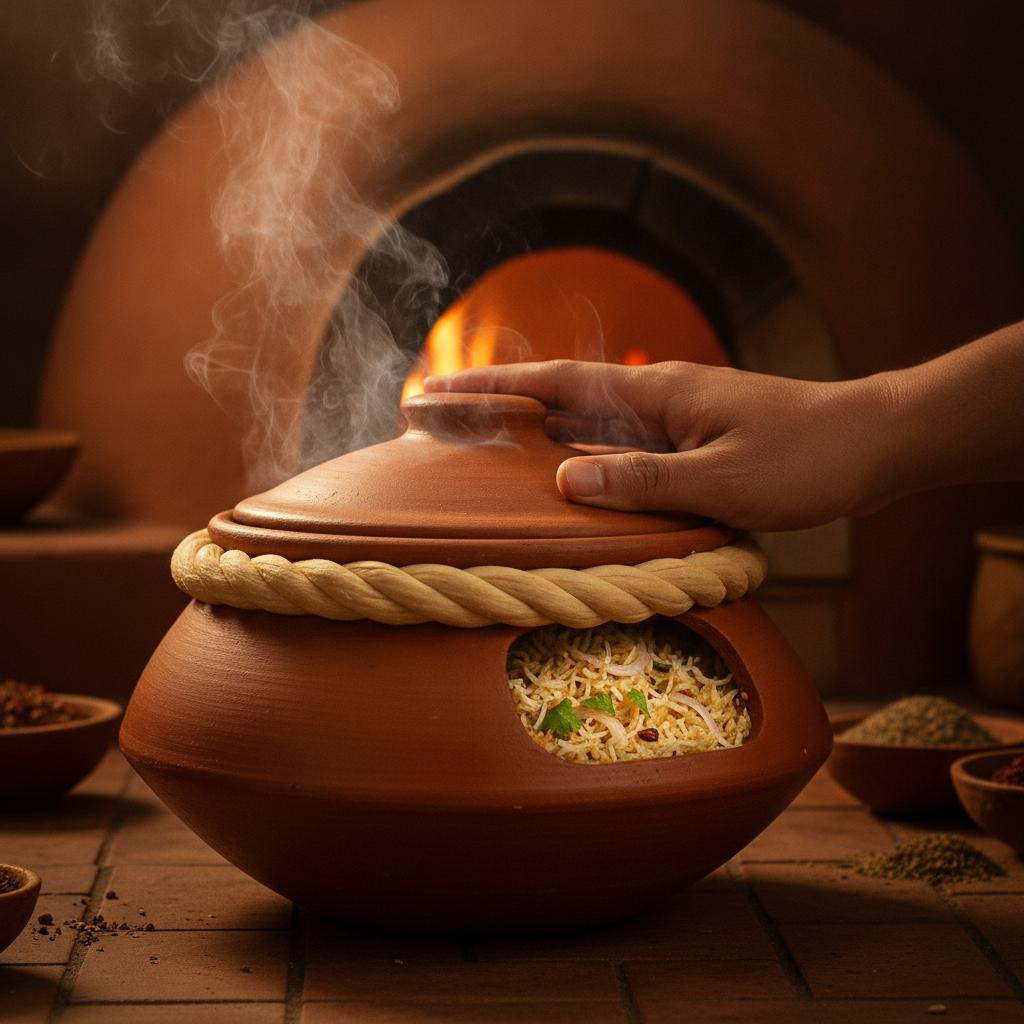
Dum, from the Persian word for breath, is the heart of the method. Once layered, the pot is sealed — traditionally with a rope of dough pressed around the lid to create an airtight joint, a technique called dum pukht. The pot sits over a low, direct flame for a period, then is transferred onto a tawa (a flat griddle) that diffuses the heat evenly. In some kitchens, live charcoal is also placed on top of the lid to create gentle heat from above.
Inside this sealed chamber, the raw meat releases its juices upward as steam. The rice absorbs that steam from below, becoming infused with the essence of the meat and spices. The meat, in turn, cooks in its own moisture and the steam reflected back by the sealed lid. Because nothing escapes, nothing is lost. Every gram of flavour that the marinade extracted from the spices ends up in the pot. This is why dum biryani carries a depth that simply cannot be manufactured by pre-cooking the meat separately and mixing it with cooked rice at the end.
The sealed pot does not just cook the food — it concentrates the entire biography of every ingredient inside it. That is the philosophical core of dum biryani, and it is why no shortcut produces the same result.
Kacchi vs. Pakki: What Is the Real Difference?
Pakki biryani is the other primary preparation style, and the distinction is straightforward: in pakki biryani, the meat is fully or partially cooked in a separate gravy before being layered with the rice. Both styles have regional champions and devoted followers, but they produce fundamentally different outcomes in texture and taste.
| Attribute | Kacchi Biryani | Pakki Biryani |
|---|---|---|
| Meat at assembly | Raw and marinated | Pre-cooked in gravy |
| Flavour integration | Meat and rice cook together; flavours fully merged | Layered after separate cooking; flavours partially integrated |
| Cooking complexity | High — timing and sealing are critical | Moderate — more forgiving process |
| Texture of meat | Exceptionally tender, falls from bone | Tender, but sometimes slightly firmer |
| Rice character | Deeply infused with meat aromatics | Flavoured primarily from layering spices |
| Hyderabadi association | Strongly associated with Hyderabadi tradition | Common across many regional styles |
The kacchi style carries higher technical risk for the cook. If the heat is too high, the rice overcooks before the meat is done. If the seal is broken too early, the steam escapes and the rice dries out. This is precisely why kacchi biryani, when executed correctly, commands such respect — and why so many restaurants quietly switch to pakki-style cooking under the pressure of volume and speed.
Why Is Hyderabadi Biryani Specifically Associated with the Kacchi Method?
Hyderabadi biryani is considered the definitive expression of kacchi-style cooking because the culinary traditions of the Nizam's court, where this biryani originated, placed an extraordinary premium on technique and restraint. The Nizams of Hyderabad maintained vast royal kitchens where dum pukht cooking was elevated to an art form, and the kacchi approach became the standard precisely because it demanded mastery and produced unmatched results.
What distinguishes Hyderabadi biryani from other regional styles is the specific spice architecture: a careful balance of whole spices (cloves, cardamom, cinnamon, star anise, bay leaves), the mandatory inclusion of fresh mint and fried onions at each layer, and the use of saffron dissolved in warm milk to streak the top layer of rice with colour and fragrance. These elements are not interchangeable or optional — they are structural to the dish's identity.
At Biryani Master, our Hyderabadi Dum Chicken Biryani and Hyderabadi Dum Mutton Biryani both follow this heritage faithfully. Our kitchen does not adapt the recipe to speed; it adapts its schedule to the recipe. Every pot goes through the full marination, layering, and dum process because we believe the guest deserves the real thing — not a version that simply resembles it.
What Makes a Kacchi Dum Biryani Worth Seeking Out in Mississauga?
A genuinely executed kacchi dum biryani is worth seeking out because it cannot be faked by someone who does not understand the underlying science and tradition. When you search for hyderabadi biryani near me in the Greater Toronto Area, the options are not all equivalent. The method behind the pot matters enormously.
There are a few markers of a properly made kacchi dum biryani that you can identify even before the first bite. The rice grains should be long, separate, and faintly translucent — they should not clump or break. The colour should vary across the serving, with pockets of saffron-orange and white, not a uniform yellow that suggests artificial colouring or turmeric used as a substitute. The aroma that escapes when the pot is opened (or the container is uncovered) should be layered: you should detect the floral note of saffron, the warmth of whole spices, the sweetness of caramelised onion, and the richness of the meat all at once.
The meat texture is another reliable indicator. In a well-made kacchi biryani, the chicken or mutton should be so tender that it barely requires chewing. This is not because it has been overcooked or stewed — it is because the marinade tenderised the fibres and the slow dum process finished the job gently, without stripping the meat of its character.
In Mississauga and across the GTA, the demand for this kind of quality has grown considerably as communities from South Asia have brought both their knowledge and their expectations with them. A home cook from Hyderabad knows immediately whether the biryani in front of them was made correctly. That informed audience is, honestly, the most honest quality check any restaurant can face — and it is the audience we cook for every day.
Our menu at Biryani Master extends beyond the traditional dum preparations. The Chicken 65 Biryani brings a South Indian influence, with its boldly spiced, flash-fried chicken folded into the rice. The Vegetable Dum Biryani offers a full dum-cooked experience built on seasonal vegetables and whole spices, prepared with the same patience as any meat-based variant. Party trays and catering for events in Mississauga allow us to bring this level of cooking to gatherings of any size — because biryani, by its nature, has always been food meant to be shared.
Ready to Taste the Real Kacchi Difference?
Order for dine-in, takeout, delivery, or plan your next event catering with Biryani Master in Mississauga. Slow-cooked. Authentically Hyderabadi.
Order from Biryani MasterAbout the Author: The Biryani Master Team
The Biryani Master team brings together a deep passion for Hyderabadi culinary tradition and years of experience cooking authentic dum biryani for the Mississauga and Greater Toronto Area community. We write about biryani the way we cook it — with care, honesty, and respect for the craft.
Frequently Asked Questions
What is the difference between kacchi biryani and regular biryani?
Kacchi biryani uses raw marinated meat layered directly with parboiled rice and sealed for slow dum cooking, while most "regular" biryanis use meat that has been pre-cooked or par-cooked before assembly. The kacchi method produces a deeper, more unified flavour because the meat and rice finish cooking together in a closed environment, exchanging moisture and aroma throughout the process.
How long does the kacchi dum biryani process take from start to finish?
From marination through to serving, a properly made kacchi dum biryani requires a minimum of several hours, with the marination phase alone typically lasting multiple hours. The dum cooking stage itself, once the pot is sealed, generally takes between 45 minutes and 90 minutes depending on the quantity, the type of meat, and the heat source. This is a preparation that cannot be compressed without compromising the outcome.
Why does the rice in a good Hyderabadi biryani taste so different from plain rice?
In a kacchi dum biryani, the parboiled rice absorbs steam that carries the dissolved aromatics from the raw meat and its marinade, the whole spices, fried onions, ghee, saffron, and fresh herbs. This absorption happens gradually over the dum stage, so by the time the pot is opened, the rice has been fully seasoned from the inside out — not just coated with a sauce applied after the fact. The result is rice that is fragrant and complex all the way through each grain.
Can I order authentic kacchi-style dum biryani for catering or large events in Mississauga?
Yes. At Biryani Master, our biryani catering for events in Mississauga is prepared using the same authentic dum process we use for individual orders — scaled appropriately for larger quantities. Whether you need party trays for a family gathering or full-scale catering for a corporate event, our team works with you to ensure every tray delivers the same slow-cooked quality that defines our cooking. Reach out through our website to discuss your event requirements.
Written by the Biryani Master Team
Our team brings deep expertise — Authentic Hyderabadi dum biryani in Mississauga — slow-cooked, for dine-in, take-away, delivery and catering..